About
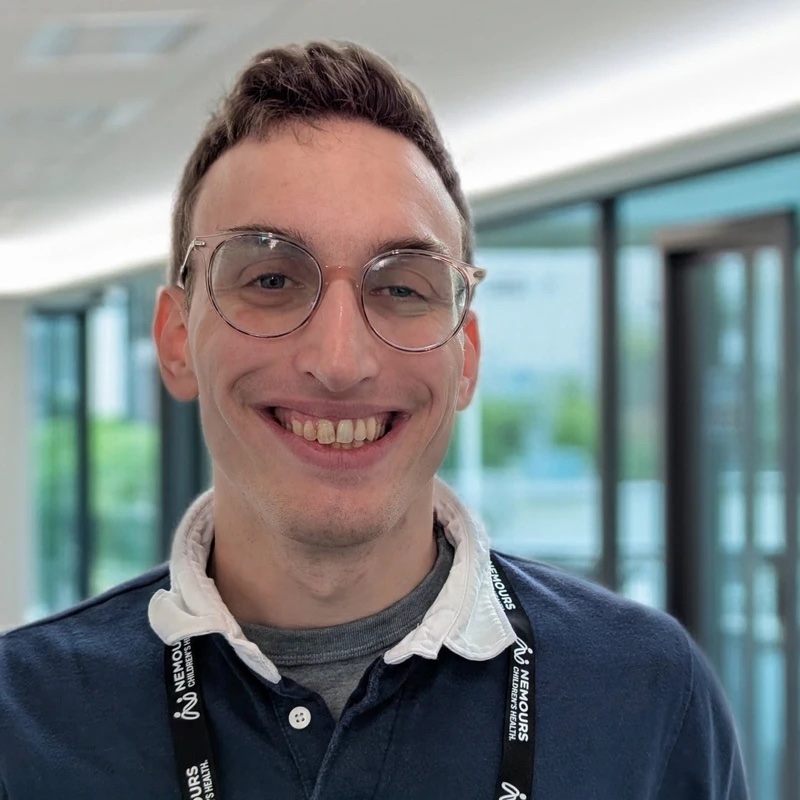
I am a PhD candidate in Rehabilitation Science at Boston University Sargent College, working in the Development, Experience, and Motor Recovery (DEMR) Lab with Dr. Claudio Ferre. I study sensorimotor integration in children with unilateral cerebral palsy, combining fNIRS and TMS to look at corticospinal connectivity and sensory cortical responses while children reach.
My dissertation follows typically developing infants and infants at risk for cerebral palsy from 6 to 24 months to understand how sensorimotor development unfolds. With BU Engineering, I am also building a moving-target reaching board that uses a physical reaching task for a more accurate, ecologically valid test of sensorimotor integration.
Before the PhD, I coordinated clinical trials at Shriners Hospitals for Children, and at Boston University School of Medicine I used wearable technology and behavioral coding to measure behavior. I like working across the whole research pipeline: designing apparatus and paradigms, coding and analyzing behavior, and writing grants and manuscripts. I am also one of the inaugural PACES Scholars at the Precise Center, Johns Hopkins Medicine, a program for early-stage investigators in precision rehabilitation, and I completed USC’s NIH-funded ReproRehab program in reproducible data science in 2024–2025.
Outside the lab, I have volunteered with CP Soccer New England since spring 2024. It runs soccer programs for kids with cerebral palsy and other neurological conditions. I also help staff the DEMR Lab’s outreach booths at community events like Science on State Street, Open Streets Boston, and Play to Thrive, where families try hands-on brain and movement activities.
Current research
Fig. 1
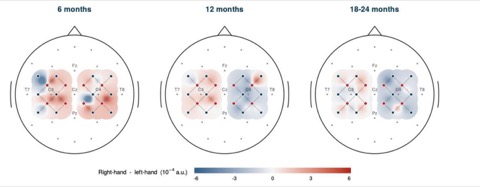
Sensorimotor development in infants at risk for CP
A longitudinal study following infants from 6 to 24 months. The focus of my dissertation.
Fig. 2
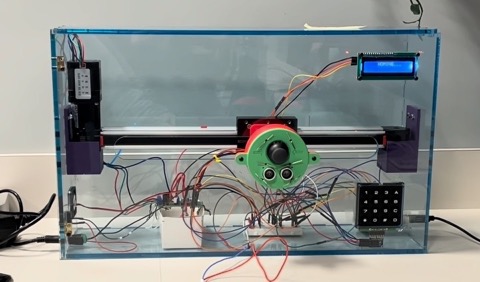
Reaching in unilateral CP
Brain, body and a new apparatus. Combining fNIRS with a custom moving-target reaching board.
Fig. 3
Better ways to measure infant movement
Comparing video coding, wearable sensors and markerless tracking, plus the coding pipelines behind them.
News
| Sep 27, 2026 | Presented two first-author posters at AACPDM 2026 in Philadelphia: one on how bilateral hand use develops, and a demonstration of our moving-target reaching board. More on LinkedIn. |
|---|---|
| Oct 15, 2025 | My first-author abstract, Motor Experience Drives Brain Development, was presented as a talk by Dr. Ferre at AACPDM 2025 in New Orleans, and I received an AACPDM Student Scholarship. |
| Oct 23, 2024 | Gave my first talk, Bimanual Skills during Infancy, at AACPDM 2024 in Québec City, presenting on Dr. Ferre’s behalf in a symposium on bimanual skills in unilateral cerebral palsy. Lab news. |
Selected work
- Comparative Effectiveness of Early Therapies for Infants and Young Children with or at-risk for Cerebral Palsy: A Network Meta-analysis2026Under review, Neurorehabilitation and Neural Repair
In plain words: Families of babies with or at risk for cerebral palsy can choose from many early therapies. This review pools results from published trials to compare how well those therapies work against each other.
- Longitudinal Trajectories of Bilateral Hand Use: Changes in Behavior and Cortical ActivityIn American Academy for Cerebral Palsy and Developmental Medicine (AACPDM) 80th Annual Meeting, Sep 2026Scientific poster SP20
In plain words: Between 6 and 24 months, babies spent about the same share of playtime touching toys, but more of that touching used both hands, often with each hand doing a different job. Brain activity shifted to match, from both sides of the brain toward the side opposite the active hand.
- Moving Target Board for Testing Online Motor ControlIn American Academy for Cerebral Palsy and Developmental Medicine (AACPDM) 80th Annual Meeting, Sep 2026Demonstration poster DP26
In plain words: A new device for testing how children correct a reach mid-movement: a real target on a motorized track jumps sideways as the child reaches for it, while a soft cap measures brain activity with light (fNIRS). It was built to understand how children control their reaches, including kids with cerebral palsy that affects one side of their body.
- Motor Experience Drives Brain Development: A Longitudinal Study of Infant Manual Skills and Cortical Activity in Neurotypical Infants and Infants with Unilateral Cerebral PalsyIn American Academy for Cerebral Palsy and Developmental Medicine (AACPDM) 79th Annual Meeting, Oct 2025Free paper R1
In plain words: We followed babies’ hand use during play and their brain activity as they grew, in babies developing typically and babies with cerebral palsy affecting one side of the body. The results suggest that babies’ own movement experience helps shape how the brain develops.
Contact
I am always happy to talk about pediatric motor neuroscience, neuroimaging methods, or rehabilitation science.
For lab news, follow the DEMR Lab on Instagram: @demrlab.